Showing posts with label Places. Show all posts

February 11, 2016

Nature's Water Spas - Hot Springs

Fancy unwinding in a hot tub as large as a lake throughout the year and with no electricity bills to pay. Then head to the nearest hot spring in your country or continent.


https://commons.wikimedia.org/w/index.php?curid=767872
Lake Heviz, the largest thermal lake in Hungary Wikipedia Commons Civerten CC BY-SA 2.5

Macaques seek comfort in a hot spring in the snow clad mountains of Japan
By Yosemite (Own work) [GFDL (http://www.gnu.org/copyleft/fdl.html) or CC-BY-SA-3.0 (http://creativecommons.org/licenses/by-sa/3.0/)], via Wikimedia Commons

Hot springs are water bodies that have temperatures above the surrounding region and definitely warmer than normal human body temperature of 98 degree F. The hot water dissolves more minerals and salts than normal water which is why many hot springs are considered to have healing powers.

Hot springs or geothermal springs is groundwater that is heated by geothermal power - heat rising from the earth's core. Below the surface these water bodies are either heated by molten rocks, if they are near a volcanic source, or through convection heating with water seeping deep enough to reach hotter cracks or rocks below.


February 06, 2016

Water and Life - Oasis in the Desert


By Real Distan (Flickr: Oasis in Gobi Desert, (c) not mine!) [CC BY-SA 2.0], via Wikimedia Commons
Deserts are arid, sandy wastes spread across all five continents and known for one thing - the absence of water. Yet no desert is completely barren. Even the largest desert such as the Sahara, have tiny (relative to the size of the desert) spots where surface water is found, enough to sustain human life, animals and vegetation.

Those who have never been to a desert have heard of two fascinating features - oasis and mirage. Oases have enabled journeys in the desert since ancient times and some of the largest oasis, supplied by underground sources and occasional rainfall, have been around for thousands of years.

Contrary to general perception, not all oases are small pools of water with a couple of swaying palms at the side. The largest oases are magnificent sights even against the grandeur of the deserts. Check out some of the most beautiful oases across the world at Smashing Lists.


January 15, 2016

Tides

The gravitational pull of the moon and sun has an effect on Earth objects, but none so visible and spectacular as that on water.

The phenomenon of tides is caused by the gravitational forces drawing water from oceans and seas in different directions causing it to rise and ebb. High and low tides fill and empty coastal areas with more prominent effects taking place at the time  of full and new moons, the equinox and supermoons.

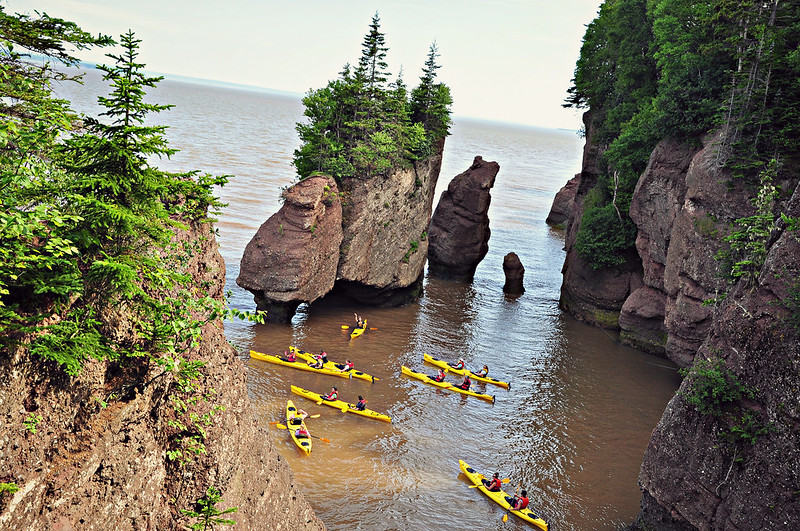
Tidal ranges record the difference between high and low tide levels on the shore. The highest tides are recorded at the Bay of Fundy in Canada.


Bay of Fundy - Hopewell Rocks - New Brunswick
 

January 02, 2016

Easter Islands - The Bluest Water on Earth

While all water is blue, there are varying shades of it as covered in this post on the colour of the sea.

But there are spots on earth which boast of crystal clear, blue pristine waters.

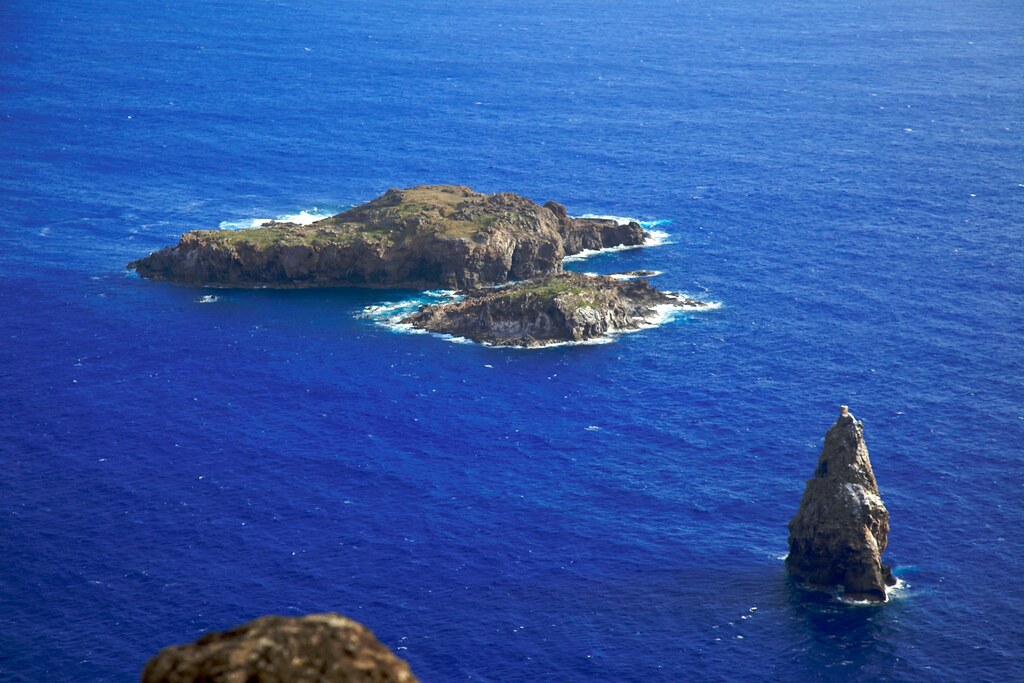
And the deepest shade of blue is considered to be found at a spot in the Pacific Ocean, a few hundred metres off the remote Easter Islands in the Southern Pacific. This deep blue shade is attributed to the absence of chlorophyll and plankton in this area. The underwater visibility extends to hundreds of feet making this location a favourite spot for divers.


Ahu Tongariki view - Rano Raraku moai - statues - Easter Island - Rapa Nui - Isla de Pascua
Flickr Photo by David Berkowitz Easter Island - Rapa Nui


Motu Nui Easter Island
Flickr Photo By: Nicolas de Camaret Motu Nui Easter Island


December 25, 2015

Seasons's Greetings Feature: Christmas Island

 
Imagine a beautiful island as a Christmas gift from Santa Claus! Christmas Island, an Australian territory in the Indian Ocean, is called so because it was first discovered by an English ship that sailed past it on Christmas day in the seventeenth century.
 
With numerous endemic species thriving in its forests and surrounding ocean, the island is often referred to as the Galapagos of the Indian Ocean. With a tropical climate, and December temperatures in the eighties (F), Christmas Island sounds like an ideal destination for a winter vacation as well.