Showing posts with label Geography. Show all posts

February 16, 2016

Waterfalls

Waterfalls are a spectacular formation of nature.

Waterfalls are formed when flowing surface water drops vertically to a lower level. Waterfalls are usually formed in the upper course of a river. The force of descending water starts eroding the surface and pushing back the mouth of the falls.

Angel Falls in Venezeula have the largest uninterrupted drop in the world (876 meters).
CC BY-SA 3.0, https://commons.wikimedia.org/w/index.php?curid=65920
 
 
By Heribert Dezeo (Own work) [CC BY-SA 3.0 (http://creativecommons.org/licenses/by-sa/3.0)], via Wikimedia Commons


The sight of a waterfall relaxes, soothes, inspires and even terrifies the human mind.
 
"The point is that when I see a sunset or a waterfall or something, for a split second it's so great, because for a little bit I'm out of my brain, and it's got nothing to do with me. I'm not trying to figure it out, you know what I mean? And I wonder if I can somehow find a way to maintain that mind stillness."
 
 "Chris Evans." BrainyQuote.com. Xplore Inc, 2016. 16 February 2016.
 

January 15, 2016

Tides

The gravitational pull of the moon and sun has an effect on Earth objects, but none so visible and spectacular as that on water.

The phenomenon of tides is caused by the gravitational forces drawing water from oceans and seas in different directions causing it to rise and ebb. High and low tides fill and empty coastal areas with more prominent effects taking place at the time  of full and new moons, the equinox and supermoons.

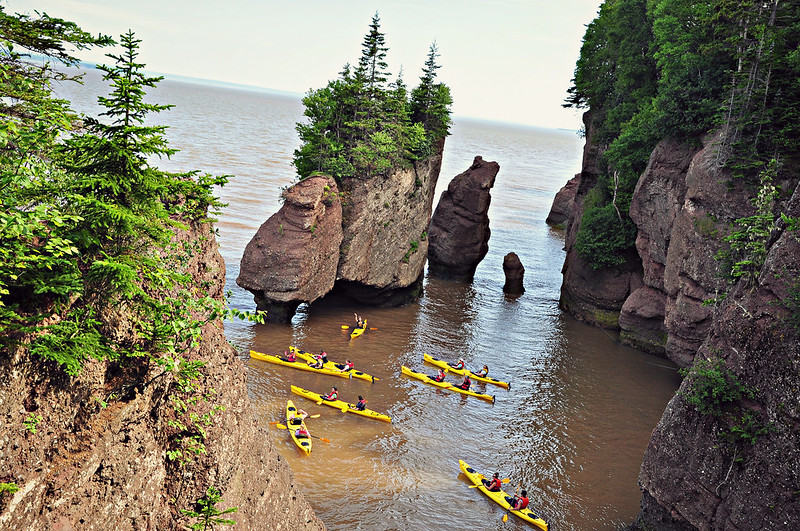
Tidal ranges record the difference between high and low tide levels on the shore. The highest tides are recorded at the Bay of Fundy in Canada.


Bay of Fundy - Hopewell Rocks - New Brunswick
 

January 02, 2016

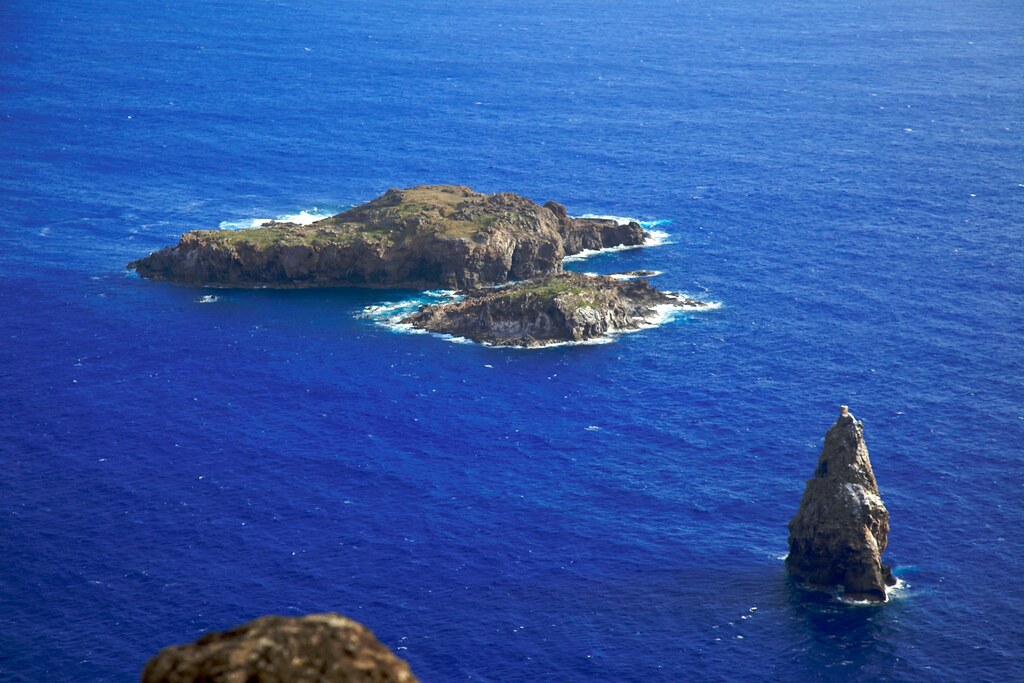
Easter Islands - The Bluest Water on Earth

While all water is blue, there are varying shades of it as covered in this post on the colour of the sea.

But there are spots on earth which boast of crystal clear, blue pristine waters.

And the deepest shade of blue is considered to be found at a spot in the Pacific Ocean, a few hundred metres off the remote Easter Islands in the Southern Pacific. This deep blue shade is attributed to the absence of chlorophyll and plankton in this area. The underwater visibility extends to hundreds of feet making this location a favourite spot for divers.


Ahu Tongariki view - Rano Raraku moai - statues - Easter Island - Rapa Nui - Isla de Pascua
Flickr Photo by David Berkowitz Easter Island - Rapa Nui


Motu Nui Easter Island
Flickr Photo By: Nicolas de Camaret Motu Nui Easter Island


December 26, 2015

Deepest Spot on Earth: Challenger Deep in The Mariana Trench

Mount Everest in the Himalayas is the highest mountain peak on Earth, standing tall at 29,000 feet or approximately 5.5 miles from sea level. The Earth's oceans at some points are deeper than the highest mountain peaks. Deep under the oceans run mountain ranges, peaks, valleys and trenches as awesome in scale and variety as those above land.

The deepest known underwater point is Challenger Deep, in the 1500 mile long Mariana Trench which is one of the known deepest and longest underground trenches. Challenger Deep is 7 miles below sea level and can easily submerge Mount Everest.  At this depth, the water pressure is intense and temperatures at sub-zero, beyond the reach of sunlight.


Deep Challenger in Mariana Trench
Kmusser [GFDL , CC-BY-SA-3.0  or CC BY 2.5 ], via Wikimedia Commons
While marine life is found even at these unfathomable depths, it is very difficult for humans to descend there. Till date only two manned expeditions have been made to Challenger Deep.

Data + Design - May - Challenger Deep
From Visually
 
The first expedition was made in 1960 and second and most recent expedition, Deep Sea Challenge, was made by Hollywood film maker and undersea explorer James Cameron in collaboration with the National Geographic in 2012.
 

December 25, 2015

Seasons's Greetings Feature: Christmas Island

 
Imagine a beautiful island as a Christmas gift from Santa Claus! Christmas Island, an Australian territory in the Indian Ocean, is called so because it was first discovered by an English ship that sailed past it on Christmas day in the seventeenth century.
 
With numerous endemic species thriving in its forests and surrounding ocean, the island is often referred to as the Galapagos of the Indian Ocean. With a tropical climate, and December temperatures in the eighties (F), Christmas Island sounds like an ideal destination for a winter vacation as well.
 

December 19, 2015

The Color of the Sea

Water is a colourless or rather, a pale blue liquid.

Large water bodies like the oceans and seas get their distinct hues from reflecting the sky.

Algae, plankton, plants and sediments in water among other things, give different water bodies other distinguishing hues such as yellow, green and even red.

Four seas of the world are named after colours - the Black Sea, the Red Sea, the White Sea and the Yellow Sea. The name of the Black Sea refers to the North direction  than the actual colours of its water!

To check out all possible shades of the sea, head over to CITCLOPS or Citizens’ Observatory for Coast and Ocean Optical Monitoring who offer an interesting colour wheel to check out different shades of sea water on their website.

Green Yellow algae mix with blue rolling waters of an ocean


Fishing boats over a dark sea reflecting an overcast, sunset sky
Shades of the Sea
Images from Unsplash


December 18, 2015

How Much Water is there on Earth

The Earth is filled with water, in liquid form, which makes it unique in the solar system.

Water occupies 71% of Earth's surface, giving it its beautiful blue appearance when seen from space.
 Only 29 percent of the Earth's surface is land.  

Earth's Western and Eastern Hemispheres. NASA image.
Of  all water on, around and under earth is  only 1/100th or 1% is available as surface freshwater that is needed for sustaining human life.

The Earth is full of water but is it filled with water.  This popular illustration from USGS (U.S. Geological Survey) shows the stark contrast.

Credit: Howard Perlman, USGS/illustraion by Jack Cook, WHOI
There are three blue spheres in the image. The largest sphere shows the total amount of water, the smaller one, total freshwater and the smallest, freshwater in rivers and lake.

This is the complete USGS study on water on Earth and more.